 Skip to content
Pre-Engineered Buildings (PEB): The Future of Fast, Strong & Affordable Construction
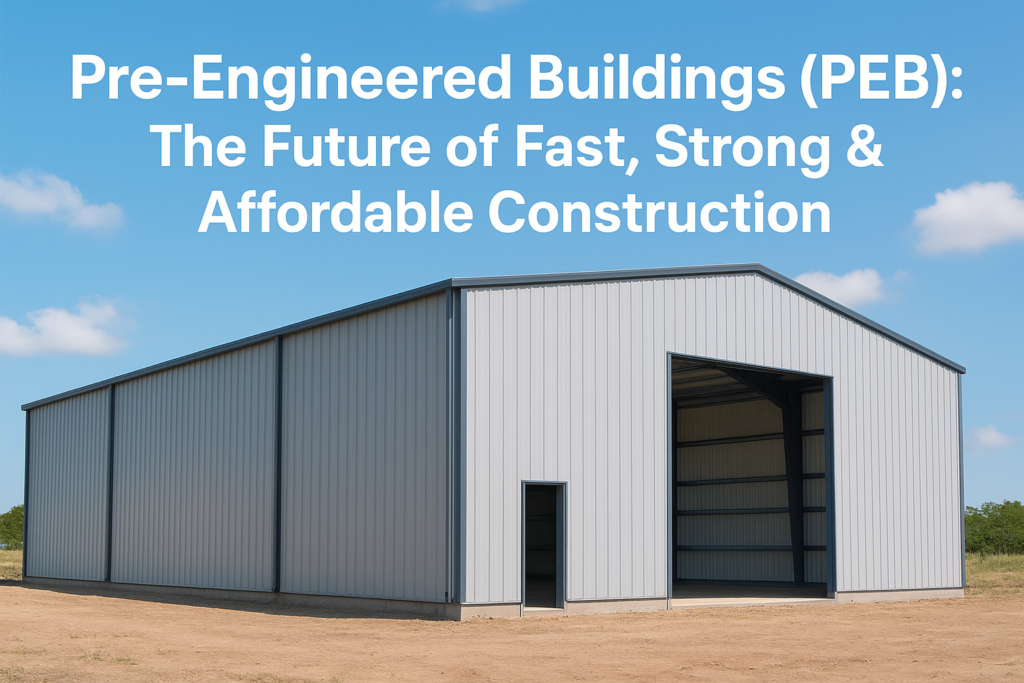
The construction world is moving faster than ever, and Pre-Engineered Buildings (PEB) construction has emerged as a game-changing solution for factories, warehouses, retail spaces, and modern homes that demand speed, strength, affordability, and sustainability.
PEB buildings are made inside factories where conditions stay steady. Components like beams or columns get built with smart programs before heading to location. These parts fit together fast once they arrive, thanks to careful planning ahead. Because everything’s pre-cut and tested, setup takes less effort, cuts delays, while lowering overall costs.
With India pushing quicker building projects, PEB now supports most new structures. This isn’t merely popular – it’s what comes next.
What Are Pre-Engineered Buildings (PEB)?
Pre-Engineered Buildings come from a factory as cut-to-size steel parts, later put together out back with bolts. Instead of stacking things up step by step at the location, these pieces show up pre-cut and fit for quick setup.
A PEB structure typically includes:
- Steel posts plus support bars make up the main structure
- Side supports like purlins, also girts, plus braces for stability
- Rooftop coverings along with side layers
- Bolts, fixings, extra bits
These parts are made to precise sizes, so they fit just right and go up fast – no hassle at all.
Why PEB Is the Future of Construction
Extremely Fast Construction
Folks usually spend months – or even years – building stuff the old way. Yet PEB buildings go up much faster, slashing time by 30 to 60 percent.
- Folks make stuff inside big buildings
- Parts come in prepped for setup
- Slight work at location – no heavy sawing or joining
- Just right positioning, also fast bolt fitting
- Pre-Engineered Buildings (PEB) construction
This is why PEB fits well with sectors needing fast scaling – so it’s often chosen when time matters.
Highly Durable & Strong
Steel-framed buildings use top-grade metal, so they’re tougher than concrete ones – lasting way longer too.
- Rust-resistant
- Earthquake-resistant
- Fire-safe
- Built for tough jobs
The solid build means it stays strong plus works well over time.
Cost-Effective Construction
PEB cuts total expenses by around a quarter.
How?
- Less manpower
- Shorter construction time
- No waste of supplies
- Lower maintenance
- Reduced foundation cost
Budgets stay tighter when building – also down the road with daily use.
Flexible & Customizable Designs
PEB works for different needs, any size you want. If it’s a tiny shed or a massive storage space, customization fits every case.
You can add:
- Mezzanine floors
- Skylights
- Insulation panels
- Extra spaces along with vents plus glass panels
It allows room to grow later without big updates.
Eco-Friendly Building Solution
As the world pays more attention to eco-friendly options, PEB stands out as a smart green choice – offering benefits that fit today’s needs while cutting down waste.
- Recyclable steel
- Less site waste
- Minimum pollution
- Energy-efficient insulation options
PEB cuts down emissions – yet still performs better.
Steel buildings need hardly any upkeep thanks to durable metal along with weather-resistant layers.
- No splitting or flaking, unlike concrete
- Minimal corrosion
- Long-lasting paint systems
- Simple to wipe down or fix
This leads to saving money over time
Applications of PEB (Where It Is Used?)
Prefab steel buildings work well for shops, factories, homes – pretty much any structure you’d need. Key uses are things like warehouses, retail spaces, workshops, storage units, office complexes, schools, and garages
- Industrial Uses
- Warehouses
- Factories
- Workshops
- Cold storage units
- Power plants
- Food processing units
Commercial Uses
- Showrooms
- Shopping centers
- Office buildings
- Exhibition halls
Agriculture Uses
- Dairy farms
- Poultry sheds
- Storage barns
Public Sector Uses
- Metro stations
- Airport hangars
- Schools & colleges
- Sports complexes
Residential Uses
- Villas
- Farmhouses
- Container homes
- Multi-storey steel buildings
The adaptability of PEB means it works across nearly any field.
How PEB Construction Works (Step-by-Step Process)
Requirement Analysis
The engineering crew starts by collecting info on the project – things like dimensions, weight demands, use case, also where it’ll sit.
3D Modeling & Design
Fancy programs build a clear layout, so things fit right while staying secure.
Factory Fabrication
All parts get made under careful control, while meeting global quality rules.
Transportation to Site
Steel parts arrive at the job spot without issues.
Site Installation
The crew puts together the frame with cranes, fasteners, while handling tools.
Final Finishing
Doors go in first – then windows follow. Panels come after, while ventilation gets set up nearby. Accessories finish the job, yet everything fits together smooth.
The outcome? A fully functional structure, up and running in just a few weeks.
PEB vs Traditional Construction – A Clear Comparison
| Feature | PEB | Traditional (RCC/Brick) |
|---|---|---|
| Construction Time | Very Fast | Slow |
| Cost | 20–30% cheaper | Expensive |
| Strength | High steel strength | Moderate |
| Maintenance | Very low | High |
| Customization | Flexible | Limited |
| Waste | Minimum | High |
| Durability | 30–50+ years | 20–30 years |
| Environment Impact | Eco-friendly | Not eco-friendly |
PEB clearly outperforms traditional construction in almost every aspect.
Advantages of PEB for Businesses
- Faster payback because it starts fast – no delays piling up before you see results
- Low operational cost
- Simple fixes or upgrades
- Weather-resistant and long-lasting
- Keeps wide areas open – no need for center posts
- High resale value
This is why PEB works well for sectors where saving time matters just as much as cutting costs – especially when speed teams up with affordability.
Future of PEB in India
The need for PEB across India should rise sharply soon because of
- Rapid industrialization
- Smart cities development
- Rising demand for storage spaces – blame it on online shopping’s growth
- Affordable infrastructure demand
- Public funding helps metal building frameworks
PEB’s expected to lead more than half of fresh factory builds by 2030. Not merely a passing phase – this is what’s coming next.
