 Skip to content
Modular Construction: Fast & Affordable Building Solution
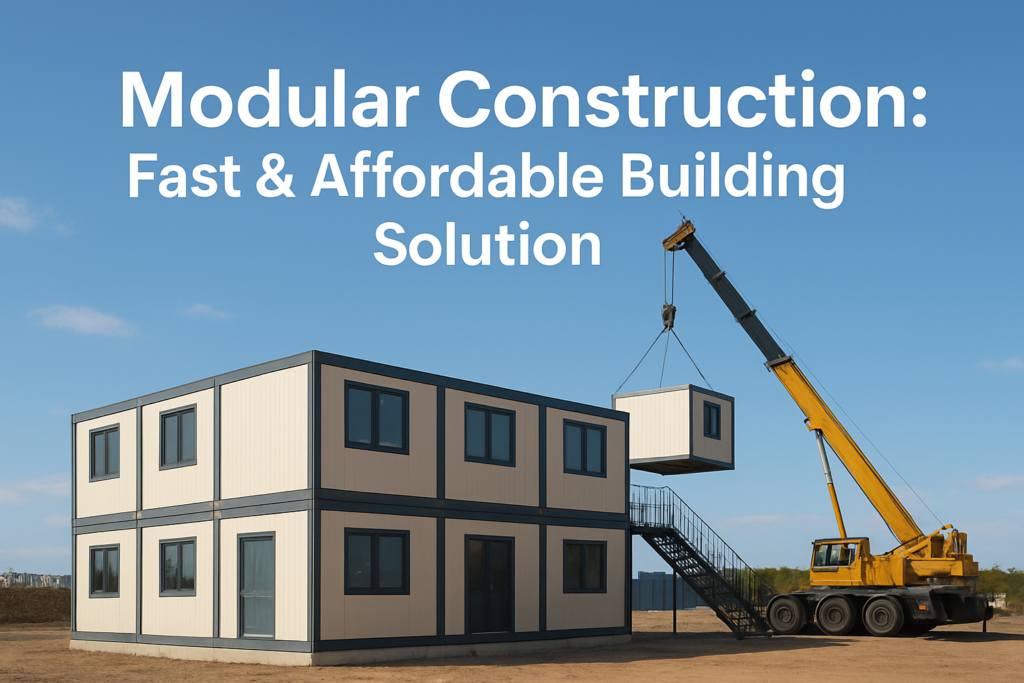
Modular construction becoming a game-changer in today’s building scene. Unlike old-school methods that drag on for months – or years – this approach delivers solid structures way faster. Thanks to quick turnaround times, reliable strength, lower costs, along with greener practices, more people across India – and beyond – are choosing it every day.
In this clear guide, let’s break down modular building – what it means, how it runs, main perks, pricing setup, real uses, growth potential across India, also reasons it’s turning into a top pick for tomorrow’s builds .
What is Modular Construction?
A way to build things piece by piece – called modular construction – involves making parts, or “modules,” inside a factory. Each unit comes complete with walls, floors, wires for power, pipes for water, glass panels, entryways, heat protection, plus built-in interiors. After production wraps up, these chunks get moved out to where the building goes and lifted into place with big cranes.
In this method, most tasks – around 70–90% – happen indoors at a plant, whereas just 10–30% get finished out in the field. That’s why building modules off-site tends to take less time, carries fewer risks, and hits measurements closer than old-school builds.
How Does Modular Construction Work?
The modular building method sticks to a clear, smooth routine – each step flows into the next without hassle
Design & Planning
The project kicks off by shaping the layout and structure based on what the client wants. Instead of just sketches, real floor plans pop up alongside 3D views. Load checks make sure everything stays safe under pressure. Insulation gets picked to keep temperatures steady. Ventilation is worked out so air flows naturally. Finishing touches are locked in before moving forward.
Factory Manufacturing
After the plan gets signed off, workers build every part inside a clean, steady workshop. Since electrical wires go in first, plumbers fit pipes right after. Insulation slips between walls before doors show up. Windows follow closely behind, tied to strong frames. Flooring rolls out once supports are solid. Finishes like paint or tiles wrap things up neatly.
Site Preparation
As the modules get made in the factory, crews also ready the building spot. That means laying foundations at the same time as hooking up power lines. Water pipes and runoff paths go in together with access roads. Each step moves forward without waiting on the others.
Transportation
Once built, the finished units get hauled to location by custom trucks that handle big cargo.
Installation & Assembly
The modules get hoisted onto the ready base by cranes – then slotted together with care to build the full shape. Often, you’ll see the whole thing standing in just a handful of days.
Final Finishing & Handover
When it’s built, checks happen – systems get tested while officials review everything. Only then does the owner take control.
Key Benefits of Modular Construction
- Faster Construction Time
Modular structures finish up to 60% quicker compared to regular builds. Because off-site production runs alongside groundwork, total project time shrinks fast. - Cost-Effective Solution
Fewer days on site mean less cash spent on workers, gear hires, management fees – also cuts down leftover materials. That’s why building in modules often saves serious money. - Superior Quality Control
All modules come together in a tightly managed factory setting, where each part goes through tough quality tests. Because of this setup, you get steady performance, fewer flaws, while lasting longer. - Environment-Friendly Process
Material waste drops by around 70–80%. Because it uses energy-saving supplies, parts that can be reused, yet creates little mess on location, modular building turns out way greener. - Strong and Durable Structures
Modular structures handle quakes, heavy gusts, along with harsh climates just fine. They tend to last as long – or even longer – than regular constructions. - Flexible and Expandable Designs
One major plus of modular structures? Their adaptability. When needs change, they’re simple to extend, adjust, move around, or rework.
Major Applications of Modular Construction
- Residential Homes
Prefab houses are gaining traction since they come together quickly, look sleek, while saving money on builds.
- Hospitals & Healthcare Facilities
Modular building lets emergency hospitals go up fast – sometimes in just a few weeks. Isolation units pop up quickly thanks to pre-built sections. Testing labs take shape sooner when parts are made off-site. Clinics appear rapidly without delays from traditional methods.
- Educational Institutions
Schools or colleges might pop up fast where needed. Classrooms alongside labs could expand as demand grows. Hostels too – whenever student numbers climb.
In the hotel business, finishing on time really matters. Because of modular building, resorts go up quicker – yet still stay reliable in standards.
- Office Buildings & Commercial Spaces
IT parks now use modular tech, while coworking spots follow close behind. Showrooms pick it up thanks to flexibility. Retail stores switch over through ease of setup. Office buildings adapt using faster construction methods.
- Industrial Buildings & Warehouses
Factories or warehouses – plus cold storage spots – gain a lot thanks to quick builds plus cheaper running expenses through prefab techniques.
Future of Modular Construction in India
India’s cities are growing fast, more homes are needed, also buildings keep going up. That’s why prefab methods could fit right into tomorrow’s plans. New city projects, low-cost home drives, factory zones, along with medical facility upgrades, are pushing newer ways to build stuff.
In big cities such as Delhi or Mumbai, space is expensive while speed matters – so modular building works well there. In places like Bengaluru and Pune, where every minute counts plus land’s hard to find, this method makes sense. Cities including Chennai or even Hyderabad face similar issues; that’s why prefab techniques are catching on fast.
Industry insiders say India’s modular building scene could triple or even quadruple over the next 10 years. Firms jumping on this tech now might end up running the pack later.
Modular Construction vs Traditional Construction
| Feature | Modular Construction | Traditional Construction |
|---|
| Construction Time | Very Fast | Slow |
| Quality Control | High (Factory-based) | Medium |
| Material Wastage | Very Low | High |
| Cost Overrun Risk | Low | High |
| Weather Impact | Minimal | Maximum |
| Expansion Flexibility | Easy | Difficult |
This comparison clearly shows that modular construction outperforms traditional construction in almost every major aspect.
Cost of Modular Construction in India
The price of modular builds changes based on things like how big the job is, what stuff you pick, how tricky the layout is – also where it’s going up.
- This price typically covers:
- Structural framework
- Interior finishes
- Wiring or pipes
- Doors and windows
- Flooring
- Insulation
- Basic painting
Compared to regular building methods, modular structures usually save money over time – thanks to lower upkeep costs as well as fewer running charges.
Are Modular Homes Safe?
Yep, modular houses are totally secure – constructed following tough nationwide plus global safety rules. Such structures are:
- Earthquake-resistant
- Fire-safe
- Wind and storm-resistant
- Heat-resistant, also blocks sound
Every unit gets checked for quality before it leaves the plant – so you know it’s safe, works well, or lasts a while.
Modular Construction: A Present-Day Necessity and a Future Trend
Nowadays folks want quick builds, clever layouts, tight budgets – yet still eco-friendly options. Old-school building methods usually can’t juggle all that at once. But prefab techniques? They actually handle every piece without breaking a sweat.
Modular building’s gaining ground fast – thanks to speedy setup, less upkeep, smart layout options, yet lower harm to nature around us.
In the next few years, fields like these –
- Affordable housing projects
- Smart cities
- Emergency healthcare facilities
- Renewable energy housing
- Disaster-relief infrastructure
might rely mostly on flexible building methods instead.
